
Google Merchant Center Policy Pages: The 5 Pages Your Shopify Store Needs (and What Each Must Say)
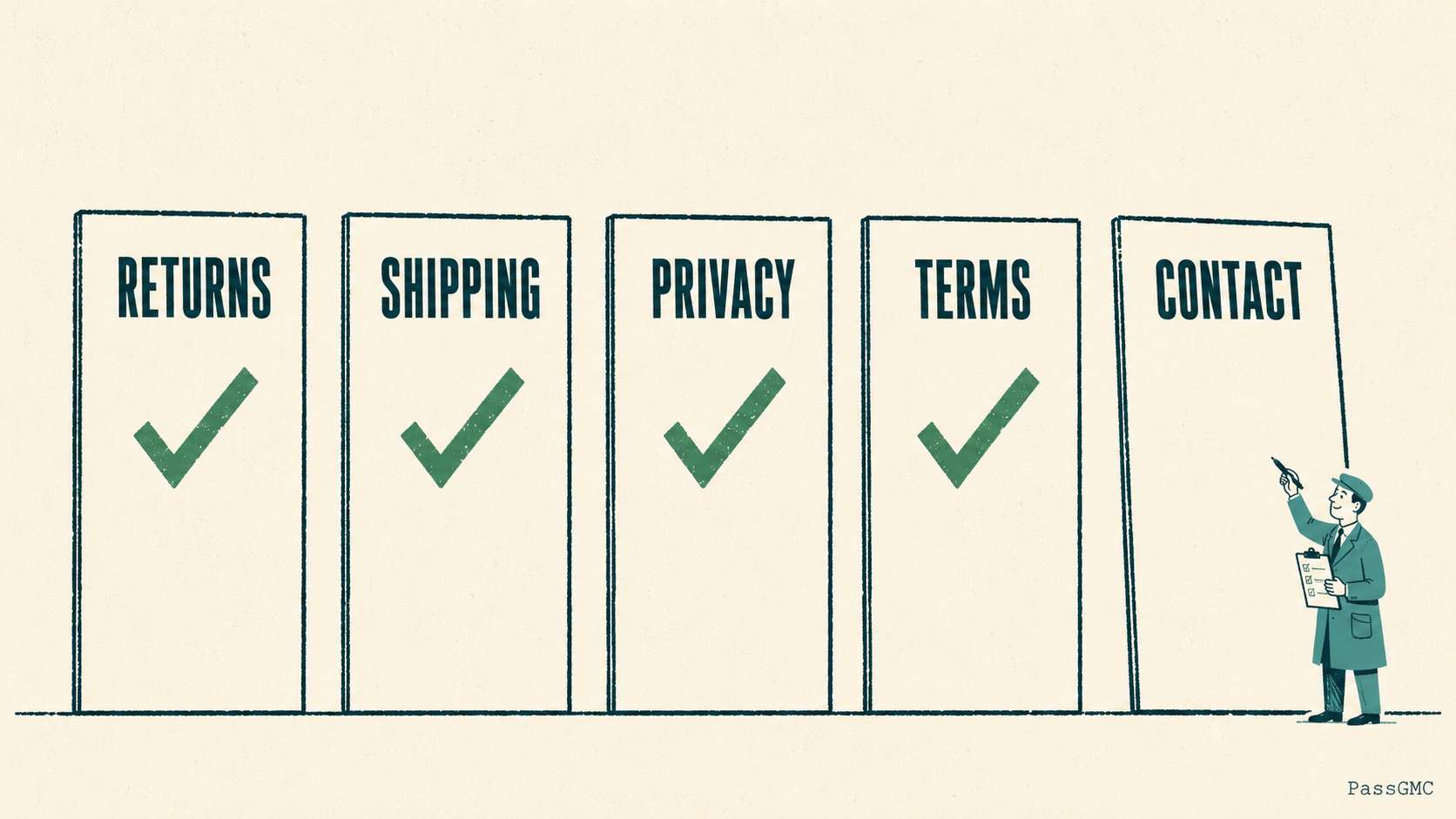
Nobody starts a store because they love writing refund policies. The policy pages get written once, late at night, usually from a template, and then everyone forgets them.
Google never forgets them. When Google Merchant Center decides whether your store can be trusted with Shopping traffic, your policy pages are among the first things it reads. They are not legal decoration. To Google they are evidence: proof that a real business, with real commitments, stands behind every product in your feed. Thin, vague, or contradictory policies are one of the most common reasons Shopify stores get flagged, and once that happens you are dealing with a full Merchant Center suspension, which is a much longer conversation.
This guide covers the five pages Google expects to find, what each one must actually say, and the consistency trap that catches even well-run stores.
Why Google reads your policy pages
Google's job is to protect the person clicking your ad. Its Misrepresentation policy requires stores to disclose their commitments openly: how much things cost, how they ship, what happens when a customer wants their money back. Policy pages are where those commitments live, so that is where Google looks.
Two things about how it looks are worth understanding.
First, your policies must be readable by anyone. Google's return policy documentation states that a policy must be accessible to all users visiting your online store, without having to log in, sign up, or enter any personal information. A policy hidden behind an account wall might as well not exist.
Second, Google checks for consistency, not just existence. The same documentation asks for policies that are consistent in Merchant Center and across your website, naming your footer, your returns page, and your web banners as places it expects to agree with each other. Your policy pages are being compared: against the settings you entered in Merchant Center, against claims on your product pages, and against each other. A returns page that promises one thing while your FAQ promises another does not read as a small oversight. It reads as a store that cannot be pinned down on its own commitments.
Return policies you submit to Merchant Center even carry a verification status. A policy can sit at pending while it is reviewed, and a rejected policy is not used at all until it meets the requirements. Google is genuinely reading, not just checking a box.
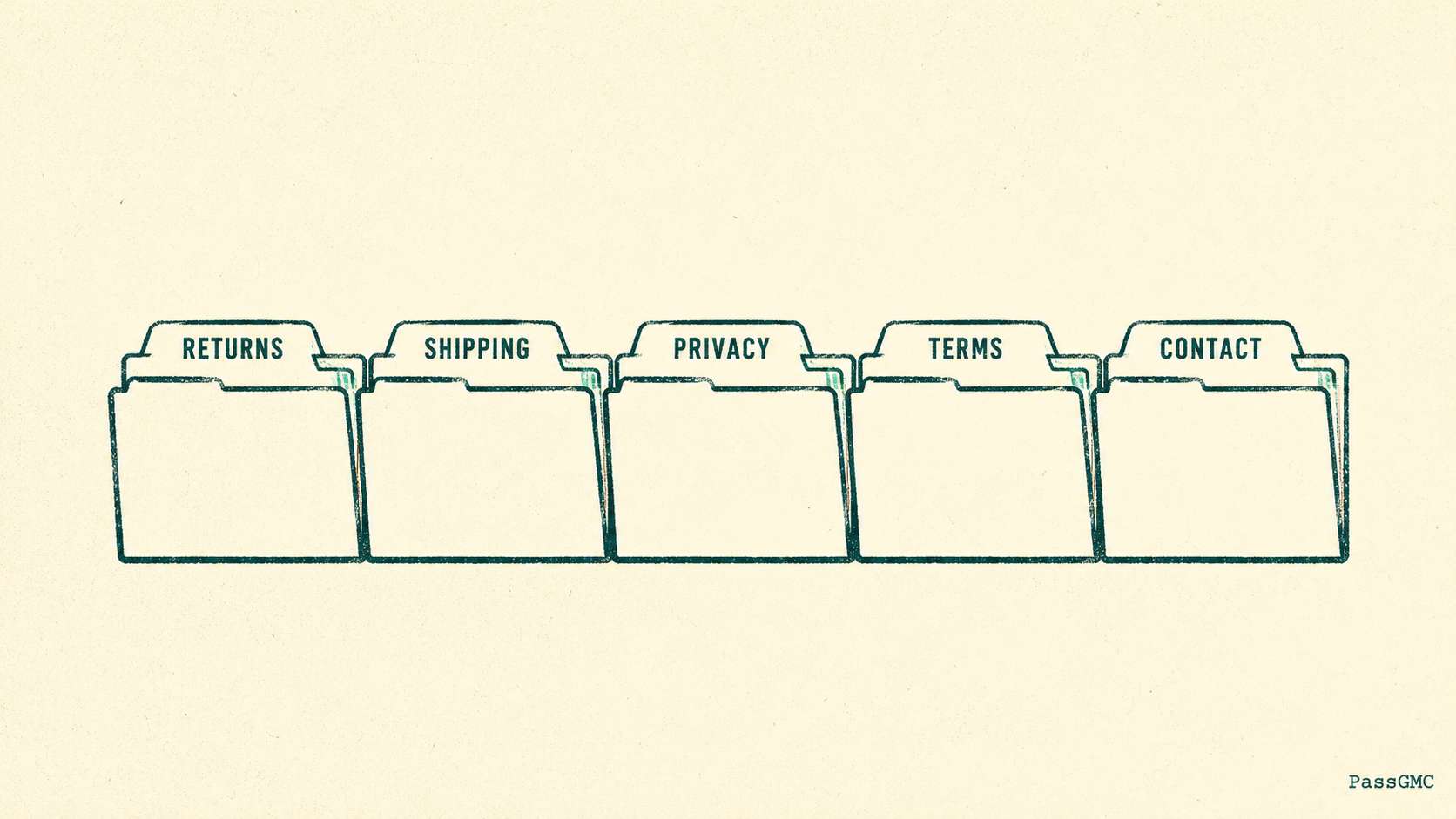
The five pages, at a glance
Page | What Google checks on it | Where it lives in Shopify |
|---|---|---|
Returns & refund policy | Return window in days, conditions, methods, fees, refund timeframe; matches your Merchant Center return settings | Settings, Policies (or a custom page), linked in the footer |
Shipping policy | Costs, handling and transit timeframes, regions served; matches your Merchant Center shipping settings | Settings, Policies (or a custom page), linked in the footer |
Privacy policy | Exists, is findable, says what data you collect and why | Settings, Policies, linked in the footer |
Terms of service | Exists, is findable, states the rules of the transaction | Settings, Policies, linked in the footer |
Contact page (plus About) | Real ways to reach a human; business details that match your Merchant Center account | Pages, linked in the footer or main navigation |
Shopify's own Google & YouTube channel requirements mirror this list: refund policy and terms of service available from your footer menu, and visible contact information with at least one way to reach you. The rest of this guide takes the five in order of how often they decide the outcome.
The returns and refund policy (the one that decides most reviews)
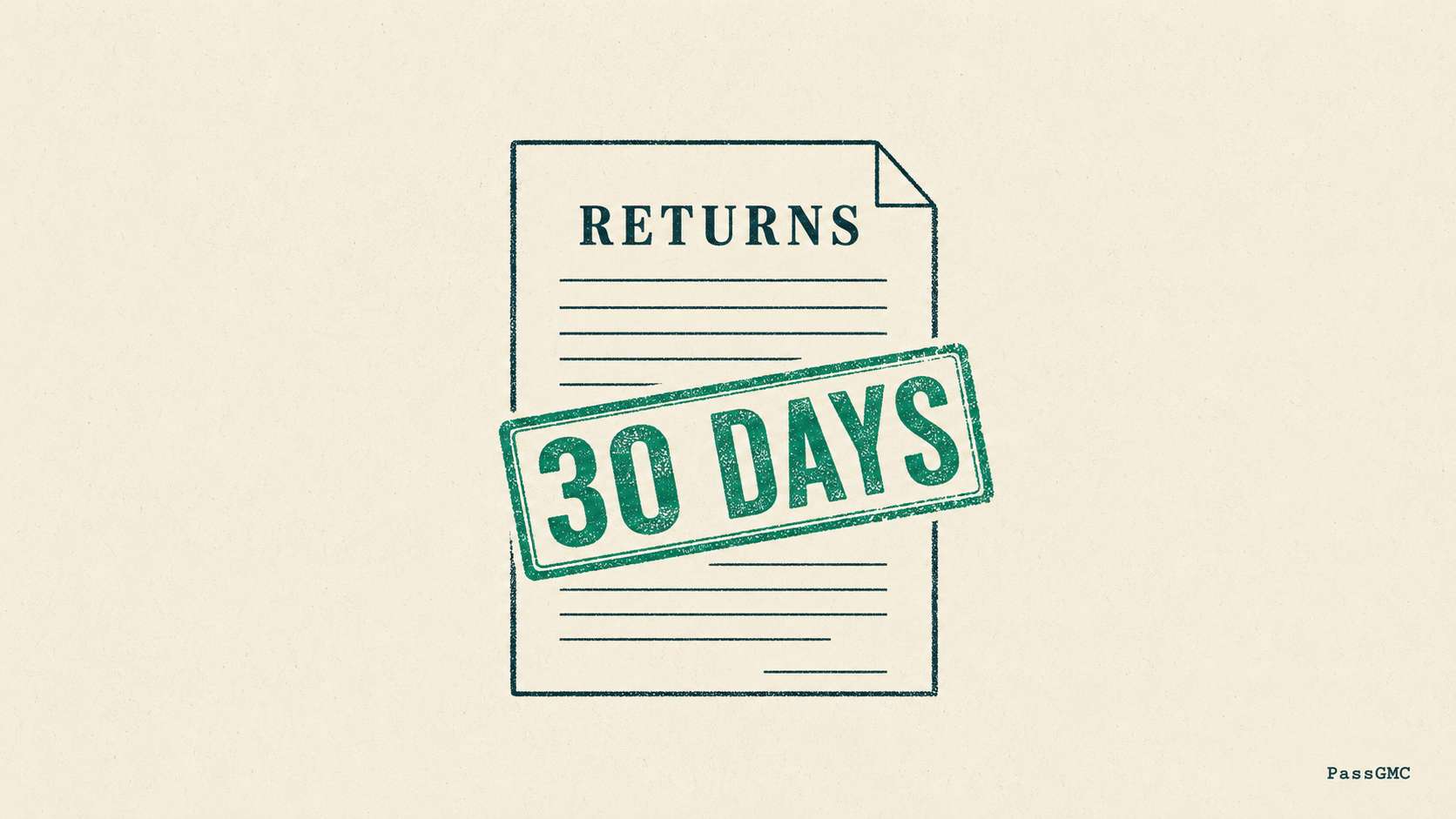
If Google reads only one page closely, it is this one. Its return policy documentation lists the exact elements a policy needs to address, and the list is more specific than most template policies ever get:
Required element | What compliant looks like | Common Shopify failure |
|---|---|---|
What can be returned | Whether you accept returns on non-defective products (buyer's remorse), or defective only | Policy only mentions damaged or faulty items |
Exchanges | Whether you accept them | Not mentioned at all |
Accepted condition | New only, or new and slightly used | Vague wording like "resellable condition" with no definition |
Return window | A specific number of days, or lifetime | "Within a reasonable time" or "contact us first" |
Return methods | In-store, drop-off point, or by mail | Not stated |
Return labels | How the customer gets one if returning by mail | Not stated |
Restocking fees | None, a fixed fee, or a percentage, stated plainly | Fees that only appear when a customer asks |
Refund processing time | How long until the money comes back | "As soon as possible" |
Two of these deserve emphasis.
The return window must be a number. Google's requirement is a specific duration in days (or an explicit lifetime policy). Every vague formulation, from "reasonable time" to "case by case", fails the same way: it gives the customer no commitment, and Google notices the absence.
Buyer's remorse matters. Google expects your policy to cover general returns, not just defective products. A policy that only accepts broken items is, in Google's framing, not a complete returns policy.
One more thing most guides skip: Merchant Center has its own return policy settings, under Shipping and returns. Whatever you enter there is a promise, and the page on your website must make the same promise. If your Merchant Center settings say 30 days and your website says 14, that mismatch is exactly the kind of contradiction that surfaces in a review.
The shipping policy

The shipping policy answers three questions before a customer has to ask: what does delivery cost, how long does it take, and where do you ship.
Cost is the sensitive one. Google compares the shipping costs you submit to Merchant Center against what your store actually charges at checkout, and an understated cost is treated as a pricing lie. Your policy page is part of that same promise. State your rates, your free-shipping threshold if you have one, and any surcharges plainly.
Time is the subtle one. A delivery estimate has two parts: handling time (order placed to order shipped) and transit time (shipped to delivered). Stores routinely publish only the transit number, then wonder why customers and Google both read "3 to 5 days" as a promise the store cannot keep once handling is added. Publish both, or publish the honest total.
Region matters too: say where you ship and where you do not, so an international customer is never surprised at checkout.
Everything here must agree with the shipping settings inside Merchant Center. That sync between Shopify and Google is one of the quietest ways stores get in trouble, and we covered its traps in detail in the suspension guide.
The privacy policy and terms of service
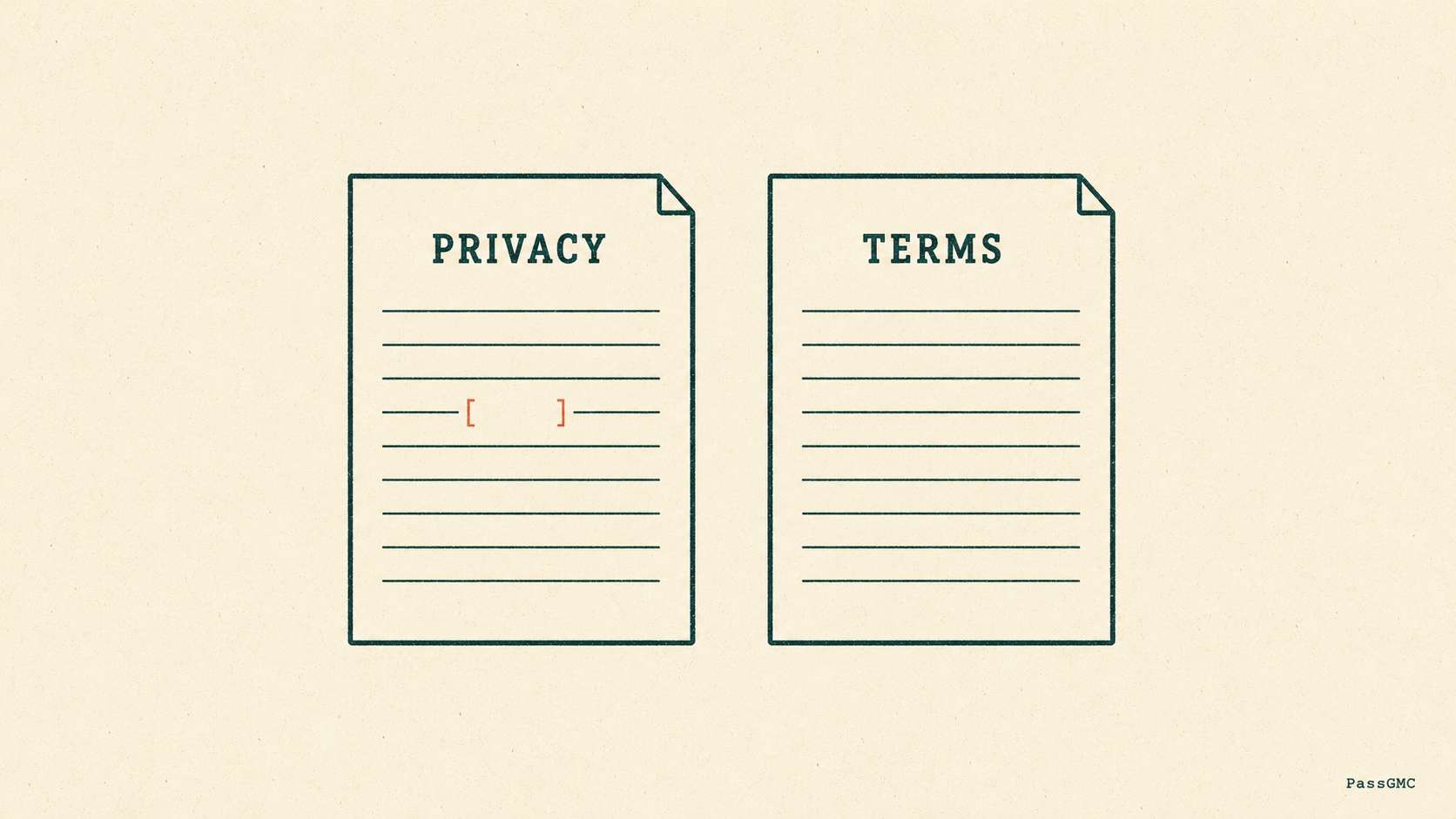
These two get less scrutiny on their contents than the returns page, but their absence is loud. A store with no findable privacy policy or terms of service looks provisional, and provisional is a trust problem.
The privacy policy should say what data you collect, why, and what third parties are involved (your payment processor, your analytics, your email tool). Shopify can generate a workable draft from Settings, Policies.
The terms of service state the ground rules of the transaction: who you are, what jurisdiction you operate from, and the conditions of sale.
The real Shopify-specific danger here is the template placeholder. Shopify's generated legal pages include bracketed placeholders, and live stores ship with them still in place more often than you would believe. A privacy policy containing "[insert business name]" tells every reader, human or algorithmic, that nobody has actually read the store's own commitments. If you use generated policies, read them once, fill every placeholder, and make sure the store name, currency, and timeframes match your actual business.
The contact page (and the about page)

Google's misrepresentation policy asks a simple question: can this store be reached? A store that hides from its customers is a store Google will not send customers to.
Your contact page should offer more than a bare web form. A real email address, a phone number if you have one, your business address, and the form if you like. Shopify's channel requirements ask for at least one working contact method visible to customers; treat that as a floor, not a target. Every detail here should match the business information in your Merchant Center account, because that agreement between the two is part of how Google verifies you are who you claim to be. Missing contact details are also one of the faults listed under Google's editorial and professional requirements.
The about page is the contact page's quieter partner. It answers who runs this store, from where, and why. Two sentences of filler do not do the job. A short honest paragraph about the actual business does.
The consistency layer (where good stores fail)
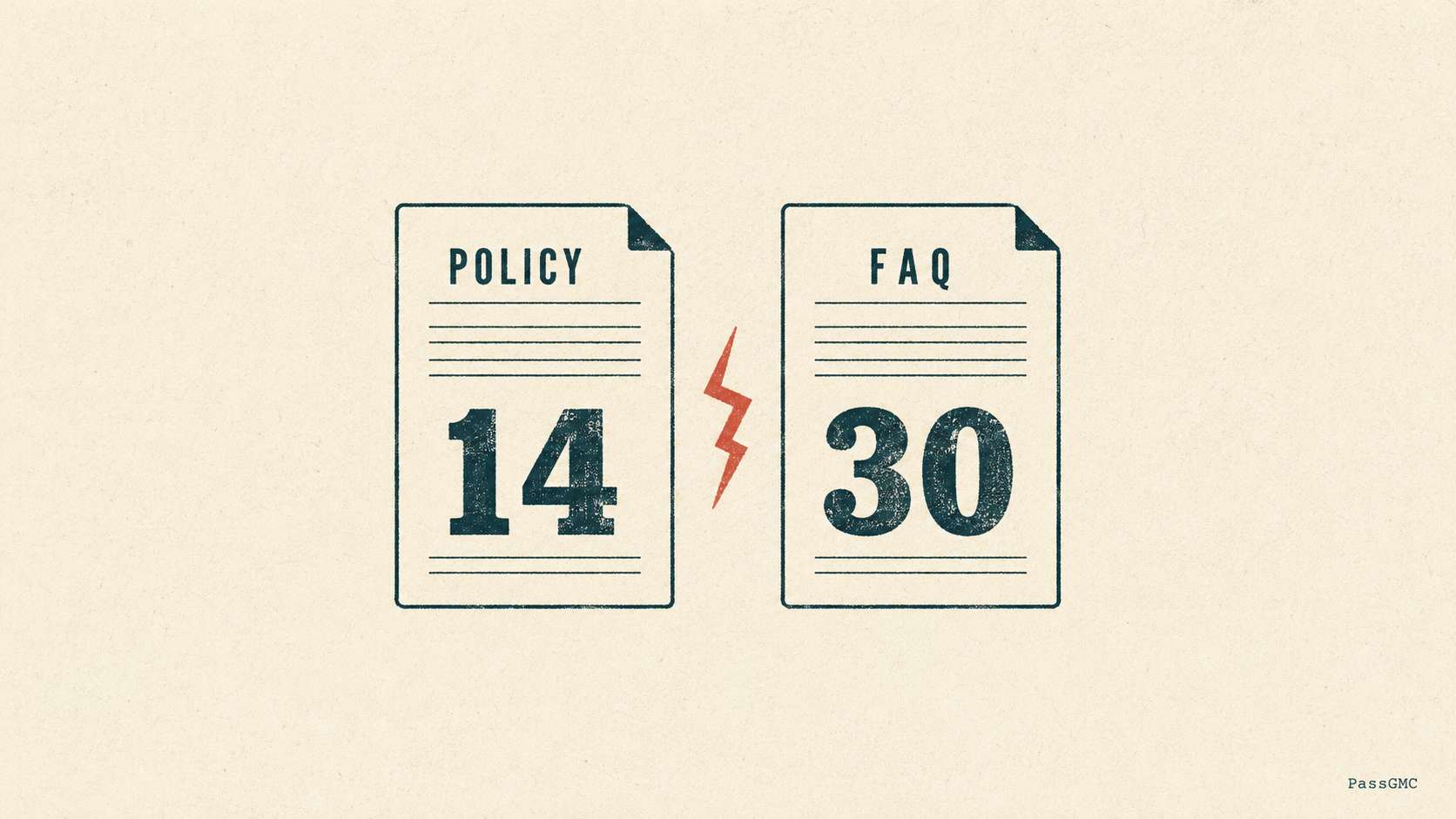
Here is the part most guides never mention: having five good pages is not enough if they disagree with each other.
Every number in your policies is a claim, and every claim gets repeated: on the policy page, in the FAQ, on product pages, in your Merchant Center settings. Google reads all of them. When two copies of the same claim disagree, the contradiction is the finding. It does not matter which version was right.
The claim | Every place it must match |
|---|---|
Return window (days) | Returns policy page, FAQ, product page copy, Merchant Center return settings |
Shipping cost | Shipping policy, checkout, product pages, Merchant Center shipping settings |
Delivery timeframe | Shipping policy, FAQ, product pages, order confirmation emails |
Restocking or return fees | Returns policy, FAQ, checkout |
Business name and address | Contact page, about page, terms of service, Merchant Center business information |
The failure pattern is always the same, and it is always innocent. A store updates its shipping policy to say 5 to 14 days, but the FAQ still says 5 to 7 from two seasons ago. Nobody lied. The store just changed one page and not the other. To a reviewer, though, the store now makes two different promises about the same thing, and that is a misrepresentation signal on the exact page Google reads most carefully.
The fix is a habit, not a project. Whenever you change a number that customers care about (a price, a window, a timeframe, a fee), search your own store for the old number before you close the tab. Policies, FAQ, product templates, and your Merchant Center settings. Five minutes, every time, and the contradiction class of problem simply never develops.
Setting it all up in Shopify

Shopify gives you two ways to publish policies, and both work if you finish the job.
The built-in route: Settings, Policies lets you write (or generate) your refund, privacy, terms, and shipping policies. Shopify publishes each on its own URL and, for most themes, links them in the checkout footer automatically.
The custom route: some stores prefer designed policy pages built as normal Shopify pages. That is fine too. What matters is not which route you choose but three properties at the end:
Each policy has its own page a customer can reach from the footer of every page, not a PDF, not a popup, not a paragraph buried inside another page.
Nothing requires an account or a form-fill to read (Google's no-login rule).
The pages agree with your Merchant Center settings and with each other.
While you are in the footer, add the contact page there as well. The footer is where both customers and reviewers instinctively look, which is exactly why Google's documentation names it.
Policy mistakes that trigger suspensions
The same handful of mistakes show up in flagged stores again and again:
The vague window. "Returns accepted within a reasonable time." No number, no commitment, no pass.
The leftover placeholder. "[Insert business name] values your privacy." Instant credibility zero.
The contradiction. Policy says 14 days, FAQ says 30. Two promises, one product.
The hidden fee. A restocking fee that first appears in an email after a customer asks to return something, rather than in the policy where Google requires it.
The gated policy. Policies readable only after login or inside checkout. Unreadable to Google means nonexistent to Google.
The defective-only policy. Only broken items can be returned. Incomplete by Google's definition, which expects buyer's remorse to be addressed.
None of these require bad intent. Every one of them is enough to start the warning-and-review machinery covered in the suspension guide.
Check your pages before Google does
Everything in this guide is checkable, which is the good news: policy problems are among the fastest suspension risks to fix, usually a writing afternoon rather than an engineering project.
It is also exactly what PassGMC scans. The free scan reads your store the way Google's review does, checks whether the five pages exist and are findable, whether the required elements are actually present, and whether your numbers agree with each other and with your Merchant Center settings. You get the prioritised list of what to fix with exact Shopify admin paths, before Google turns the same checks into a suspension email.
Frequently Asked Questions
Does Google require a return policy?
Yes, in effect. Google's return policy requirements expect a policy that states what can be returned, within how many days, by what method, at what cost, and how refunds are processed, and it must be readable without logging in. A store without one fails the transparency bar that Merchant Center reviews against.
Can I just use Shopify's generated policies?
Yes, as a starting point. Generated policies are compliant in structure but generic in content. Fill every placeholder, set real numbers for windows and fees, and make sure the generated text matches what your store actually does. Then link them in your footer.
Do my policy pages need to match my Merchant Center settings?
Exactly, yes. Google's documentation requires return policies to be consistent in Merchant Center and across your website. Treat the settings and the pages as one document that happens to live in two places: change one, change the other, same day.
Want your policy pages checked against all of this in about a minute? Run a free PassGMC scan and see exactly where you stand.
See where your store stands, free.
Run a free headline scan and get your readiness score in about a minute. No sign-up needed to see it.
Scan my store